

LAST UPDATED - MAY 5, 2026 JKHO
A guide to strategic crosslinking and inbound citation management for multi-domain networks. Establish topical authority, distribute PageRank, and optimize digital connectivity for medical search and AI discovery.
Why Crosslinking Matters
Crosslinking within and across our sites improves search visibility, usability, and credibility. It helps search engines understand relationships between pages and connects trusted sources like uwmedicine.org, Right as Rain, and the Newsroom, making it easier for users to find related information while strengthening overall site authority.
Effective crosslinking must be intentional, maintain clarity, and follow consistent editorial standards for enhanced trust for health and safety.
A strong strategy links relevant secondary topics that support the main content, expanding depth and relevance for users and search engines. Decisions should consider page type, purpose, and business priorities. Always look for opportunities to add meaningful cross-links when creating or updating webpages.
What are the different types of links?
- Internal links: Strategic pathways that connect related content within a single domain to establish topical authority and improve crawlability for search engines.
- Cross Domain linking: Links to and from uwmedicine.org, Right As Rain and the UW Medicine Newsroom. These links provide references, context, and trust by directing users to reputable sources.
- Backlinks: High-authority citations from medical and news sources (e.g., NIH, US News) that serve as external validation, strengthening multiple domain ecosystem authority and improving visibility for competitive search terms.
Choosing link types within web components
- Text Links (within copy) - Used for contextual references that fit naturally into the narrative. Best for SEO and subtle guidance.
UWMedicine.org Specific
- Banners – Promote campaigns and key messages for marketing, announcements, or navigation.
- Story Cards – To display a curated set of three stories (articles, news, features, or posts in a card layout for quick scanning, comparison, and navigation.
Tip: Use text links for ongoing SEO value, and reserve banners/CTAs for critical or strategic cross‑links so the page doesn’t feel cluttered.
What Crosslinking is Not?
- It’s not adding the same keywords repeatedly to boost rankings.
- It’s not adding the same keywords repeatedly to boost rankings.
- It’s not something you do once and forget; it’s an ongoing process and maintenance.
How to Crosslink uwmedicine.org, Right as Rain and Newsroom
UW Medicine operates a multi-domain ecosystem that includes editorial, institutional, and clinical content. Internal and cross-domain linking must be intentional, governed, and repeatable to avoid authority, dilution, maintenance debt, and user confusion.
Crosslink steps:
There are several steps to take for crosslinking strategies. The most important thing is cross-collaboration with other teams about pertinent content, news, or articles that they are working on. Collaboration is the key to success.
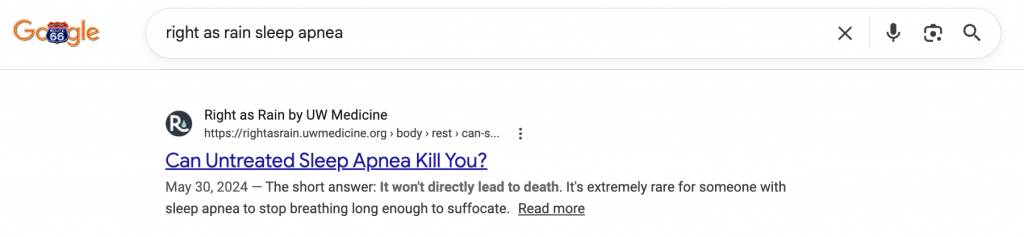
- Search on Google for the topic you like to crosslink to the other two sides.
- Example: “right as rain sleep apnea”
- Connect with your peers at uwmedicine.org, Right As Rain and the Newsroom to coordinate and exchange cross links between the sites.
- UW Medicine Page Owners
- Right As Rain articles, contact Luke Whelan
- Newsroom articles, contact Susan Gregg
- After updating the page with the crosslinks, please ensure the links are working as expected.